 By Gary DeMar
“But [Jesus] answered and said, ‘Every plant which My
heavenly Father did not plant shall be uprooted. Let them alone; they
are blind guides of the blind. And if a blind man guides a blind man,
both will fall into a pit'” (Matt. 15:13-14).
As soon as Brexit became an issue, I knew that prophecy writers would
be fine tuning their charts. For decades we have been told that
the European Union or European ‘Common Market’ was necessary for the
rise of the antichrist.
Sure enough, Franklin Graham tied Brexit to Bible prophecy:
“The Rev. Franklin Graham said Friday that the ‘historic’
Brexit vote had been foreshadowed in the Bible and urged leaders in
both Europe and the United States to look to God for ‘wisdom and
discernment’ amid the ensuing upheaval.
‘With the breakdown of immigration laws and economies, millions of
Europeans feel that their politicians have failed them,’ Graham said on
Facebook.
“We don’t know what the #EUReferendum vote means long-term, but I
know that this is at least a temporary setback for the politicians in
this country and around the world who want a one-world government and a
one-world currency. The Bible speaks that one day this will take place.”
Understand what Graham is saying. While Brexit is a good thing in the
short term, don’t get too excited because a future is coming when
Europe – a revived Roman Empire – will arise and all prophetic hell will
break loose. He’s telling Christians, without actually saying it, that
there is really no long-term way to turn things around. Enjoy the
moment, but don’t think that any effort on our part will make any
difference.
For a very long time, I and other Christian writers have been making
the point that a person’s view of the future matters. It has long-term
social, moral, and political cultural consequences. There’s been a lot
of angst over how the Christian Right has lost its mojo. It never really
had it because the prophetic card was always on the table. Consider the
late Jerry Falwell (1933–2007) who started the Moral Majority in 1979.
On a December 27, 1992 television broadcast, he said that he did “not
believe there will be another millennium . . . or another century.” He
was wrong, but this didn’t stop him from making further predictions
about Armageddon. He wrote the following on July 23, 2006:
“It is apparent, in light of the rebirth of the state of
Israel, that the present-day events in the Holy Land may very well serve
as a prelude or forerunner to the future Battle of Armageddon and the
glorious return of Jesus Christ.”1
Graham and Falwell have taught this very popular view of Bible
prophecy for years, and it’s had a profound negative effect on millions
of Christians who are waiting for a “rapture” to rescue them from an
inevitable prophetic end that’s always going to happen “soon.”
Let me take you back a few decades – nearly nine to be exact – to the year 1927. Oswald J. Smith wrote
Is the Antichrist at Hand? –
What of Mussolini?
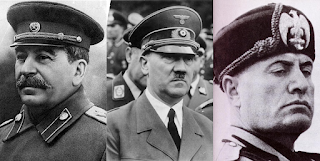
Smith believed that the fascist dictator Benito Mussolini, who had
ruled Italy since 1922, was the predicted antichrist. Ample biblical
evidence was put forth to establish his claim. In addition, Smith also
believed that the Bible’s prediction about a revived ten-nation Roman
confederacy in Europe was on the horizon. All the prophetic pieces were
in place. Smith was so sure of his views that in subsequent printings of
his book, he included the following on the front cover:
“The fact that this book has run swiftly into a number of
large editions bears convincing testimony to its intrinsic worth. There
are here portrayed startling indications of the approaching end of the
present age from the spheres of demonology, politics and religion. No
one can read this book without being impressed with the importance of
the momentous days in which we are living.”

Following the prophetic script outlined by C. I. Scofield in his
note-filled edition of the Bible named after himself, Smith was emphatic
that “Ten nations, no more, no less, are to become allied and known as
the Roman empire because Rome will be the centre, the capital, and it
will be in Rome that the Emperor will reign.”
2
The book went through multiple editions and printings. So for 23
years Christians were assured that the end was near. It was – for
Mussolini, and Hitler, and Stalin.
Similar predictions have been made by more modern prophecy writers. In his
Late Great Planet Earth,
Hal Lindsey wrote about a “ten nation [European] confederacy” that
would be in place by 1980. For support, he quoted Dr. William Hallstein,
the former president of the European Economic Community, who described
how a “Common Market could someday expand into a ten-nation economic
entity who industrial might would far surpass that of the Soviet Union.”
Lindsey remarks, “Imagine that. A ‘ten-nation economic entity.’”
3
But something happened to Smith on his road to prophetic certainty. In
April 1945, just before the Allied armies reached Milan, Mussolini was
caught by Italian Communist partisans as he tried to escape to
Switzerland. He and his mistress, Clara Patacci, were hanged. Oops! Now
that’s a monkey wrench in a well-oiled prophetic machine. Lindsey was
also off the mark. The European Union is much bigger than ten nations
and includes nations not originally part of the old Roman Empire and
excludes the nations of northern Africa that were. But Smith did what no
modern-day prophetic speculator has dared to do. He apologized for his
presumption. John Warwick Montgomery adds this bit of historical
perspective: “I understand that after the fall of Mussolini, Smith
himself tried to buy up all remaining copies of the book to destroy
them.”
4 This may be one of the reasons why Smith’s book is so hard to find today.
The ten-nation common market idea is beginning to take a back seat to
historical and biblical realities. The union is now made up of 28
nations. Part of a revived Roman Empire also includes Israel and
northern Africa which prophetic speculators seem to have forgotten.
Montgomery’s warning needs to be heeded:
“We are not saying that such efforts at end-time prophecy
reach the level of the false prophets condemned in the Old Testament:
those who ‘speak a vision out of their own heart, and not out of the
mouth of the Lord’ (Jer. 23:16). But we are saying that
end-time prophecy lacks the necessary factual grounding to make it an
effective apologetic to the unbeliever – and that it can be and often is
in reality counterproductive, lowering rather than raising the credibility of Christianity in the eyes of the outsider.”5
Does this mean that we as Christians should dismiss world events as
outside the searching eye of Scripture? Not at all. There are enough
non-prophetic examples in the Bible that can be used to analyze current
social, moral, cultural, and political events. Consolidated political
power is certainly a biblical issue, both in its efficiency (Ex. 18) and
its potential for danger (1 Sam. 8). Christians can offer a reasonable
voice without the dogmatism inherent in the ever-changing pronouncements
found in prophetic speculation.


